
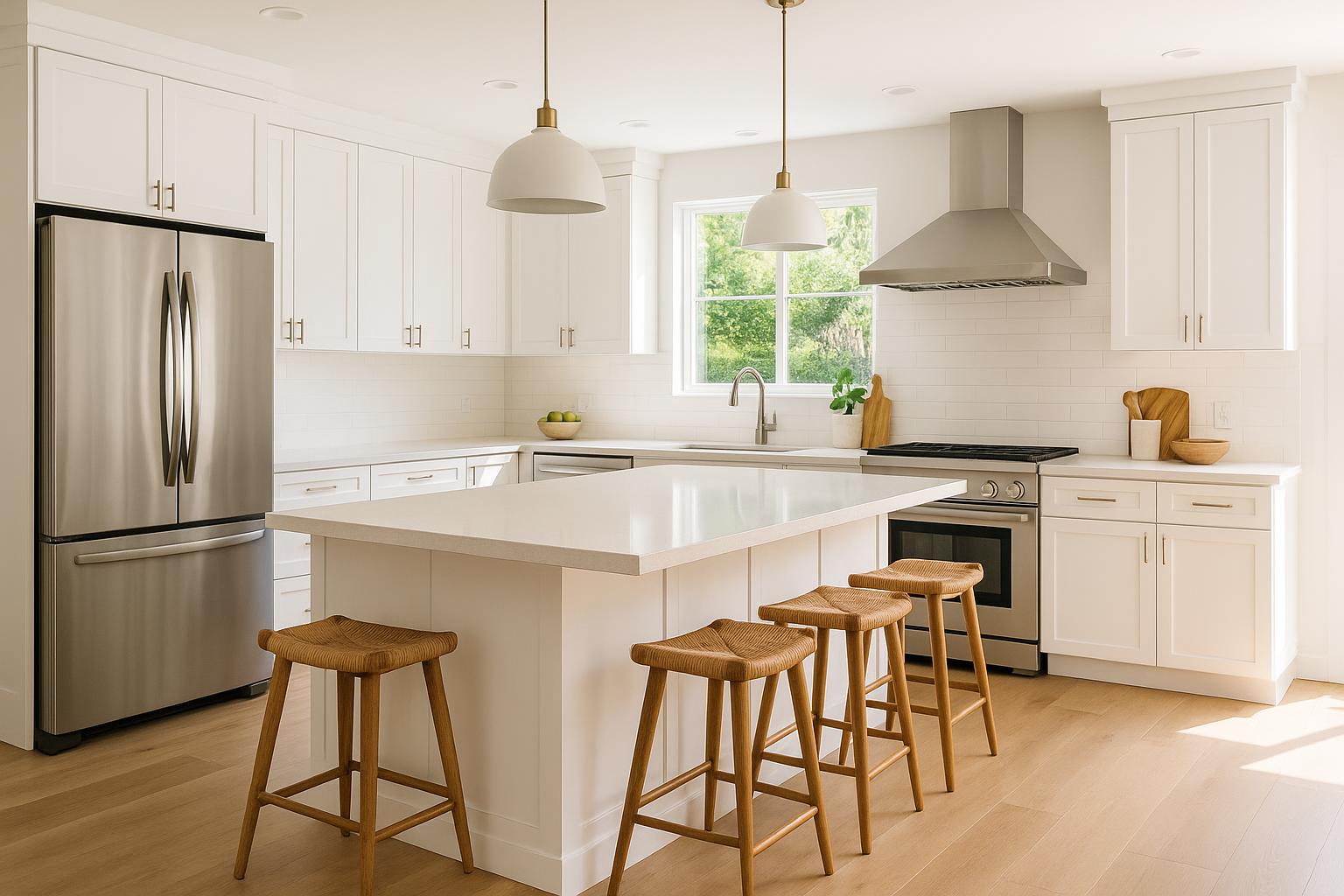
Your Kitchen Remodel Starts Long Before Demo Day
If you've been scrolling through kitchen inspiration photos and mentally ripping out your outdated countertops, you're not alone. Kitchen remodeling is consistently one of the most popular home improvement projects in La Jolla, and for good reason. It's the room where families gather, where mornings begin, and where guests inevitably end up during every dinner party.
But a kitchen remodel is also one of the most complex renovations you can take on. It touches plumbing, electrical, gas lines, ventilation, cabinetry, flooring, and sometimes structural elements. Rushing in without a clear plan is how budgets spiral and timelines double.
Here's what La Jolla homeowners should think through before committing to a kitchen renovation — so you end up with a space you love, not a project you regret.
Set a Realistic Budget (Then Add a Buffer)
The number one question homeowners ask is: How much will this cost? The honest answer is that it depends on the scope. A cosmetic refresh — new countertops, cabinet refacing, updated fixtures — will cost significantly less than a full gut renovation that reconfigures the layout.
In the La Jolla market, a mid-range kitchen remodel typically falls between $45,000 and $85,000, while high-end renovations with custom cabinetry, premium appliances, and structural changes can exceed $120,000 or more. These numbers reflect the reality of building costs in coastal San Diego, where permitting, materials, and skilled labor come at a premium.
Whatever your target budget, add a contingency of 10 to 20 percent. Older La Jolla homes, especially those built in the 1950s through 1970s, often reveal surprises behind the walls — outdated wiring, corroded plumbing, or inadequate framing that needs to be brought up to current code.
Understand What Requires Permits
Not every kitchen update requires a permit, but more work does than most people realize. In general, if you're moving or adding plumbing, relocating electrical panels or circuits, removing or modifying walls, or changing the footprint of the kitchen, you'll need permits from the City of San Diego.
Cosmetic changes like painting, replacing hardware, or swapping out a faucet on existing plumbing typically don't require permits. But the line between cosmetic and structural isn't always obvious.
- Moving a sink or dishwasher to a new location requires a plumbing permit.
- Adding recessed lighting or new circuits for appliances requires an electrical permit.
- Removing a wall — even a partial one — may require a structural engineering review.
- Upgrading a gas line for a new range requires both a plumbing and mechanical permit.
Skipping permits might seem like a shortcut, but it creates real problems down the road. Unpermitted work can complicate a home sale, void insurance claims, and create safety hazards. A reputable contractor will handle the permitting process for you and make sure inspections happen on schedule.
Think About How You Actually Use Your Kitchen
Before you fall in love with a specific layout from a magazine, spend a week paying attention to how you actually move through your kitchen. Where do bottlenecks happen? What frustrates you most — lack of counter space, poor lighting, not enough storage, an awkward traffic flow?
Design should follow function. Some questions worth considering:
- Do you cook elaborate meals, or do you mostly reheat and assemble?
- Do your kids do homework at the kitchen island while you cook?
- Do you entertain frequently and want an open layout that connects to the living area?
- Do you need a dedicated pantry or would you rather maximize cabinet storage?
A good designer or design-build remodeler will ask these questions early. The goal isn't to replicate someone else's dream kitchen — it's to build one that works for your household's actual daily life.
Choose Materials That Make Sense for Coastal Living
La Jolla's coastal climate is beautiful, but it's also hard on certain materials. Salt air accelerates corrosion on metal fixtures and hardware. Humidity fluctuations can affect wood over time. Direct sunlight streaming through west-facing windows can fade certain countertop materials and flooring.
Here are a few material considerations specific to our area:
- Countertops: Quartz and porcelain slabs hold up exceptionally well in coastal environments. Natural stone like marble is stunning but requires more maintenance and is susceptible to etching.
- Cabinetry: Solid wood and high-quality plywood with proper finishes outperform particleboard and MDF in humid conditions. Marine-grade finishes are worth the investment near the coast.
- Hardware and fixtures: Look for stainless steel, solid brass, or finishes rated for coastal environments. Cheap chrome-plated hardware will pit and corrode within a few years.
- Flooring: Porcelain tile and luxury vinyl plank are durable, water-resistant, and handle sandy foot traffic well. Hardwood can work but requires more upkeep.
Plan for the Timeline — It's Longer Than You Think
A full kitchen remodel in La Jolla typically takes 8 to 14 weeks from the start of demolition to final walkthrough. But the total timeline from your first planning conversation to cooking your first meal in the new space is often 4 to 6 months when you factor in design, material selection, permitting, and lead times on cabinets and appliances.
Custom cabinetry can take 6 to 10 weeks to fabricate. Specialty appliances sometimes have lead times of several months. Permit review in San Diego can take 4 to 8 weeks depending on the scope and whether plan corrections are required.
The best thing you can do is start planning early and make material selections before demolition begins. Delays almost always happen when decisions aren't made in time or when products aren't ordered early enough.
Set Up a Temporary Kitchen
You'll be without your kitchen for the duration of construction. Most families set up a temporary station in another room with a microwave, toaster oven, electric kettle, and a small refrigerator. It's not glamorous, but having a plan in place makes the process far more manageable.
Pick the Right Contractor for the Job
A kitchen remodel involves coordinating multiple trades — demolition, framing, plumbing, electrical, HVAC, drywall, tile, cabinetry installation, countertop fabrication, painting, and finish carpentry. That's a lot of moving pieces, and the quality of your experience depends heavily on who's managing them.
When evaluating contractors in La Jolla, look for:
- A valid California contractor's license (you can verify this on the CSLB website).
- Experience with kitchen-specific remodels, not just general handyman work.
- A clear, detailed written estimate that breaks down costs by category.
- References from recent local projects you can actually call or visit.
- A realistic timeline — be cautious of anyone who promises an unusually fast turnaround.
At Pinnacle Room Addition, we approach kitchen remodeling as a design-build process, handling everything from initial planning and permitting through final installation. This single-source approach keeps communication clear, timelines on track, and accountability in one place.
A Kitchen Remodel Is Worth Doing Right
A well-executed kitchen renovation will change how you experience your home every single day. It can also deliver strong return on investment — kitchen remodels consistently rank among the top projects for recouping costs at resale in the San Diego market.
But the key word is well-executed. Take the time to plan thoroughly, budget honestly, and choose a team you trust. Your future self — the one cooking in a kitchen you actually love — will thank you.